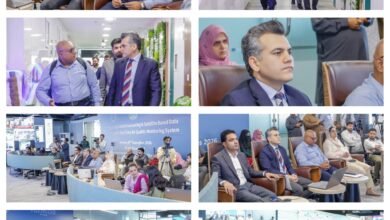
Lahore recorded a 15 per cent net improvement across six major air pollutants during the first year of the Punjab government’s real-time air quality monitoring programme, while the city’s peak Air Quality Index (AQI) declined by 28pc in October 2026 compared to the corresponding period last year, according to a report released by the Environment Protection and Climate Change Department (EPCCD).The department said the improvement reflected a reduction across six major atmospheric pollutants rather than a change in a single parameter, particularly fine particulate matter (PM2.5). Lahore also recorded no days in the hazardous AQI category, defined as an index above 300, during October 2026, against four such days in October 2025.The findings are based on the first full year of real-time air quality monitoring and publicly available ground-based measurements. The government said the data provided an empirical basis for assessing the impact of its air pollution control measures and developing targeted interventions.According to the EPCCD, the first reading on Punjab’s real-time air quality portal was published on Oct 1, 2025, with an initial network of 30 regulatory-grade monitoring stations. The network has since expanded to 59 stations, which continuously measure six air pollutants and seven meteorological parameters.The government plans to increase the number of monitoring stations to 100 during the 2025-26 period to strengthen its capacity for monitoring ambient air quality across the province.The department maintained that the expanded network had enabled authorities to make more informed decisions through accurate, ground-based measurements, particularly in contrast to assessments relying on low-cost, non-regulatory sensors and satellite-derived models.The EPCCD also highlighted the role of meteorological conditions in interpreting the improvement. According to official Pakistan Meteorological Department statistics, Lahore received 50pc less rainfall in October 2026 than in October 2025, indicating that the improvement was recorded despite relatively drier conditions.Another important factor in assessing air pollution is the atmospheric boundary layer, also known as the mixing height, which determines the volume of air available to dilute and disperse pollutants.The department said ground-based measurements conducted by the Space and Upper Atmosphere Research Commission (SUPARCO) using a ceilometer in Lahore showed an increase of only 10 metres in the minimum mixing layer height during the comparison period.This finding was presented in contrast to a 25-metre increase cited by the Pakistan Air Quality Initiative (PAQI). The EPCCD questioned the reliability of the latter assessment, arguing that ground-based instruments provided more appropriate measurements for evaluating local air quality interventions.
The department also referred to peer-reviewed research published in January 2026, which identified systematic biases of between 200 and 500 metres in ERA5 reanalysis data over the monsoon region. It said such model-derived products were useful for regional research but had limitations when used to assess the local impact of air pollution control policies.Alongside monitoring infrastructure, the Punjab government has been implementing a multi-sectoral air pollution reduction strategy targeting transport, industrial emissions, brick kilns and agricultural burning.In the transport sector, the government has introduced 612 electric buses, while also providing electric bikes and improving traffic management to reduce emissions from conventional vehicles. The department said around 500,000 vehicles had undergone emissions testing, while more than 800 legal notices had been issued to heavy transport vehicles over emissions and fitness certification requirements.The government aims to expand its electric bus fleet to 3,000 vehicles as part of its clean mobility strategy.Industrial compliance has also been strengthened through the Environment Protection Force, which monitors emissions, fuel quality and fugitive dust control systems at more than 600 sites across Punjab. The department said industries emitting excessive smoke without adequate emission-control systems, as well as units using unauthorised fuels, were not allowed to operate.The government has also imposed a complete ban on the operation of tyre pyrolysis plants and the use of carbon powder as industrial fuel, citing concerns over hazardous emissions.Agricultural emissions, particularly those caused by the burning of crop residue, remain another major component of the anti-smog strategy. The EPCCD said field-level stubble-burning incidents had declined by one-third during the first year after the government provided 10,000 super seeders to farmers through targeted subsidies.The government plans to increase the number of subsidised super seeders to 25,000 and introduce additional mechanised solutions, including Kubota harvesters and stubble balers, to discourage open burning and facilitate the use of crop residue as industrial fuel.The department also attributed part of the reduction in emissions to changes in the energy and industrial sectors. According to the latest statistics from the Ministry of Energy’s Petroleum Division, the annual compound growth rate of coal consumption declined by 14.2pc.Meanwhile, more than 95pc of brick kilns in Punjab have adopted the zigzag technology, which the department said had helped reduce coal consumption and emissions from the brick-making sector.The EPCCD said coordination among government departments and stakeholders, coupled with regulatory enforcement, cleaner transport initiatives and the expansion of ground-based monitoring, had contributed to the progress recorded during the first year.It maintained that the 2026 findings provided a baseline for measuring future improvements and refining pollution-control interventions, while emphasising that sustained enforcement and a transition towards cleaner fuels and technologies would remain essential to protecting public health and improving air quality in Lahore and other parts of Punjab.