The Punjab Local Government Act, 2025 (PLGA 2025) introduces significant changes to the structure, powers, and autonomy of local governments in Punjab. The comments provided by Mubeen Uddin Qazi (Advocate Supreme Court of Pakistan) highlight major concerns regarding the bill, particularly its shift towards bureaucratic control at the cost of elected representation. Below is a detailed elaboration of these concerns:
—
1. Structural Changes in Local Government
Abolition of Zila Councils and Shift to Tehsil Councils
Previously, Punjab’s local government system had Zila Councils (District-level councils), which played a key role in governance.
Under PLGA 2025, Zila Councils have been abolished and replaced by Tehsil Councils, effectively eliminating district-level elected governance.
This change concentrates local governance at a lower level while removing a critical layer of democratic representation.
Replacement of Metropolitan Corporations with Town Corporations
Earlier, large cities had Metropolitan Corporations, which centralized governance for urban centers like Lahore.
Now, Metropolitan Corporations are being replaced by multiple “Town Corporations.”
This means even a major city like Lahore can be split into multiple Town Corporations, fragmenting administrative control.
This restructuring raises concerns about coordination and uniform policy implementation across large cities.
No Special Status for Lahore
Previously, Lahore was treated as a single Metropolitan Corporation.
The new bill removes its special status and allows for its division into multiple administrative units.
This could lead to fragmented governance and difficulties in addressing city-wide challenges under a unified leadership.
Elimination of District-Level Local Governments
The bill removes district-level elected local governments entirely.
This decision contradicts the principles of devolution by removing an important administrative tier and placing all control under Deputy Commissioners (DCs).
—
2. Election & Control of Local Representatives
No Direct Elections for Chairmen/Vice Chairmen (Union Councils)
Previously, Chairmen and Vice Chairmen of Union Councils were directly elected by the public.
Under the new bill, these positions will now be elected by the members of the council.
This change allows for manipulation and pressure on elected members, making it easier to replace Chairmen and Vice Chairmen through political maneuvering.
Sections 55(5) & (6), 56, 57, and 132 grant the power to replace Chairmen and Vice Chairmen based on internal council votes.
Impact of Ex-Officio Membership in Higher Councils
The Chairman of a Union Council will automatically become a member of the relevant Tehsil Council, Town Corporation, Municipal Corporation, or Municipal Committee.
This means that any change in the UC Chairman will also change the composition of the higher-tier local governments, making these councils vulnerable to political engineering.
This system reduces stability and accountability in local governance.
—
3. Revenue & Financial Control
Local Governments Receive Only 25% of Revenue Generated in Their Jurisdiction
Under Section 32(2), any government agency, authority, or entity performing municipal functions like land use regulation, building control, or private housing regulation will retain 75% of the revenue they generate.
This means that the actual local governments will only receive 25% of the revenue generated within their territorial jurisdiction.
This is a major concern as municipal functions are exclusive responsibilities of local governments, but they are being deprived of the majority of the revenue.
Government Collects All Taxes on Behalf of Local Governments
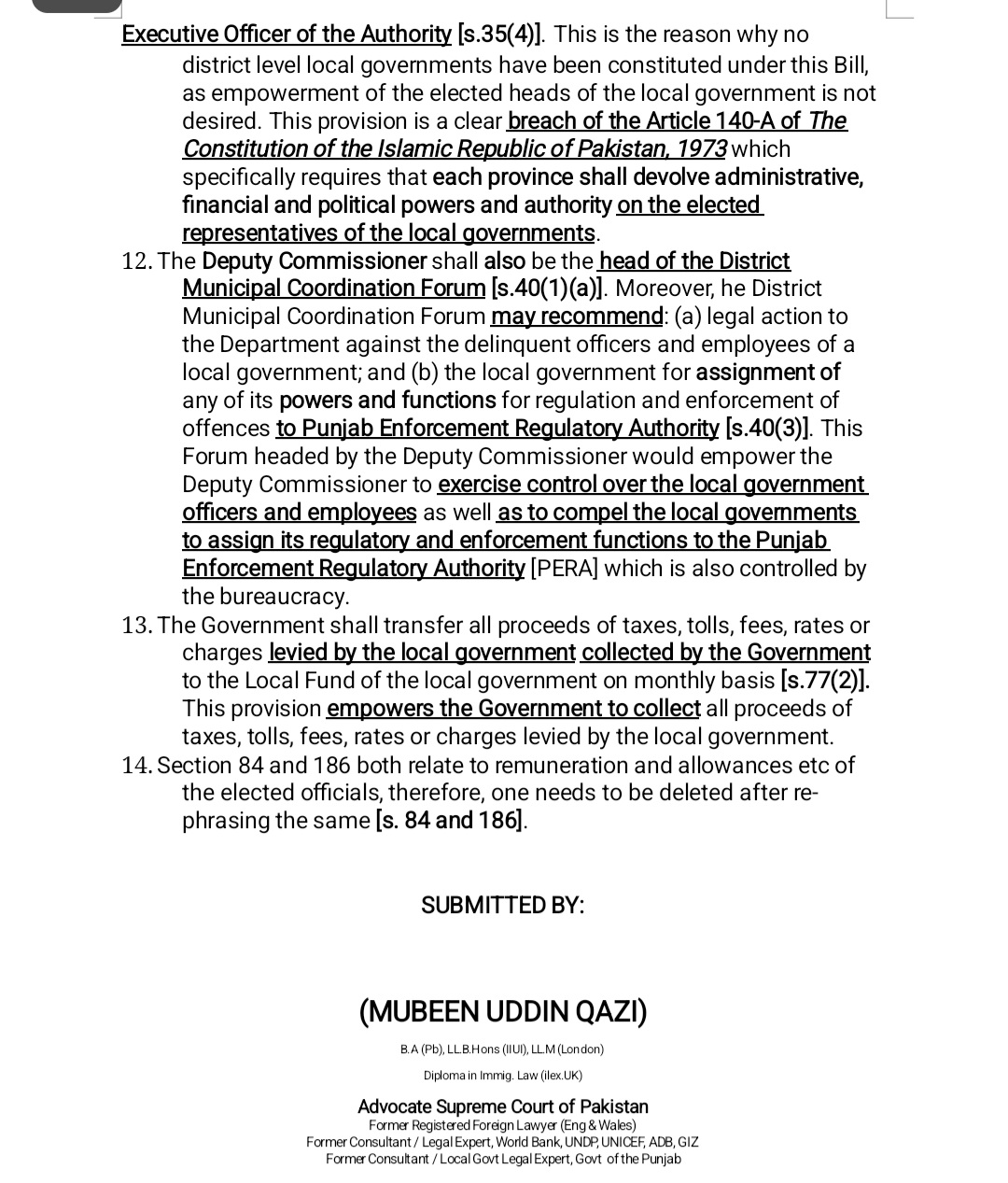
Section 77(2) states that the Government will collect all local taxes, tolls, fees, rates, and charges levied by local governments.
The collected proceeds will then be transferred monthly to local governments.
This means that local governments will be entirely dependent on the provincial government for financial resources, reducing their financial autonomy.
—
4. Increased Bureaucratic Control
Deputy Commissioners Given Extensive Control Over Local Governments
With the abolition of district-level governments, the Deputy Commissioner (DC) is now the head of all District Authorities (Section 35(1)(a)).
Each devolved department in a district will have its departmental head as the Chief Executive Officer (CEO).
This system is designed to ensure that no elected official has real administrative control, contradicting the principles of local government autonomy.
Deputy Commissioner’s Authority Over Local Government Employees and Functions
The Deputy Commissioner will also head the District Municipal Coordination Forum (Section 40(1)(a)).
This forum can:
Recommend legal action against local government employees (Section 40(3)(a)).
Recommend assigning local government powers to the Punjab Enforcement Regulatory Authority (PERA) (Section 40(3)(b)), which is controlled by the bureaucracy.
This means that local government officials and functions can be transferred to a provincial body at the DC’s recommendation, further limiting elected local officials’ authority.
—
5. Legal & Constitutional Concerns
Violation of Article 140-A of the Constitution
Article 140-A of the Constitution of Pakistan (1973) mandates that each province must devolve administrative, financial, and political powers to elected representatives at the local government level.
The bill violates this constitutional requirement by removing elected control and replacing it with bureaucratic control under the Deputy Commissioners.
By not constituting district-level local governments, the bill weakens the political and administrative autonomy of elected local representatives.
Conflicting Sections (84 & 186) on Remuneration of Elected Officials
Sections 84 and 186 both address the remuneration and allowances of elected officials.
One of these sections should be deleted or reworded to avoid redundancy.
—
Conclusion: Shift from Elected Representation to Bureaucratic Control
The Punjab Local Government Act, 2025 represents a significant departure from democratic local governance. The bill:
Eliminates district-level elected governments.
Replaces direct elections with indirect selection methods, making local representatives susceptible to political manipulation.
Strips local governments of financial autonomy.
Places extensive control in the hands of Deputy Commissioners and provincial bureaucracy.
Violates constitutional provisions on devolution of power (Article 140-A).
These changes undermine the essence of local governance and devolution, effectively making local governments subservient to the provincial bureaucracy rather than the electorate.
If enacted in its current form, PLGA 2025 would centralize power in the hands of bureaucrats, weakening local democracy and governance.
 پنجاب لوکل گورنمنٹ ایکٹ 2025 (بل) پر ایم کیو کے تبصروں کا تفصیلی تجزیہ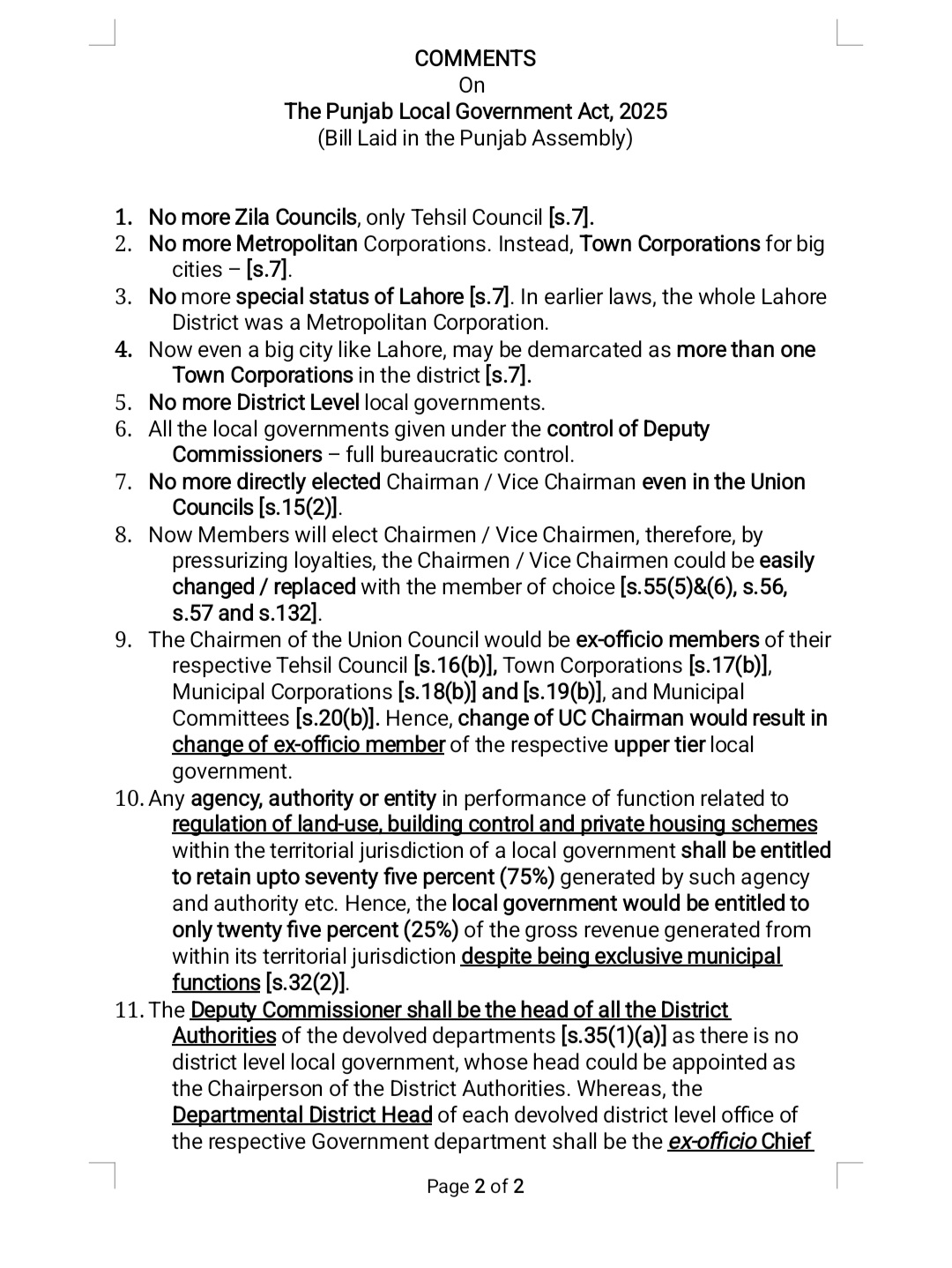
پنجاب لوکل گورنمنٹ ایکٹ، 2025 (PLGA 2025) پنجاب میں مقامی حکومتوں کے ڈھانچے، اختیارات اور خود مختاری میں اہم تبدیلیاں متعارف کراتا ہے۔ مبین الدین قاضی (ایڈووکیٹ سپریم کورٹ آف پاکستان) کے فراہم کردہ تبصرے بل کے حوالے سے بڑے خدشات کو اجاگر کرتے ہیں، خاص طور پر منتخب نمائندگی کی قیمت پر بیوروکریٹک کنٹرول کی طرف اس کی تبدیلی۔ ذیل میں ان خدشات کی تفصیلی وضاحت ہے:
— 1. مقامی حکومت میں ساختی تبدیلیاں
ضلع کونسلوں کا خاتمہ اور تحصیل کونسلوں میں شفٹ
اس سے پہلے، پنجاب کے بلدیاتی نظام میں ضلع کونسلیں (ضلع سطح کی کونسلیں) تھیں، جو گورننس میں کلیدی کردار ادا کرتی تھیں۔PLGA 2025
کے تحت، ضلع کونسلوں کو ختم کر دیا گیا ہے اور ان کی جگہ تحصیل کونسلوں نے لے لی ہے، جس سے ضلعی سطح پر منتخب حکمرانی کو مؤثر طریقے سے ختم کیا جا رہا ہے۔ یہ تبدیلی مقامی گورننس کو نچلی سطح پر مرکوز کرتی ہے جبکہ جمہوری نمائندگی کی ایک اہم تہہ کو ہٹاتی ہے۔
میٹروپولیٹن کارپوریشنز کو ٹاؤن کارپوریشنوں سے تبدیل کرنا
اس سے پہلے، بڑے شہروں میں میٹروپولیٹن کارپوریشنز تھیں، جو لاہور جیسے شہری مراکز کے لیے مرکزی طرز حکمرانی کرتی تھیں۔
اب، میٹروپولیٹن کارپوریشنز کی جگہ متعدد "ٹاون کارپوریشنز” لے رہے ہیں۔اس کا مطلب یہ ہے کہ لاہور جیسے بڑے شہر کو بھی کئی ٹاؤن کارپوریشنوں میں تقسیم کیا جا سکتا ہے، انتظامی کنٹرول کو ٹکڑے ٹکڑے کر کے۔ یہ تنظیم نو بڑے شہروں میں ہم آہنگی اور یکساں پالیسی کے نفاذ کے بارے میں خدشات کو جنم دیتی ہے۔
لاہور کے لیے کوئی خاص حیثیت نہیں۔
اس سے پہلے لاہور کو واحد میٹروپولیٹن کارپوریشن سمجھا جاتا تھا۔ نیا بل اس کی خصوصی حیثیت کو ختم کرتا ہے اور اسے متعدد انتظامی اکائیوں میں تقسیم کرنے کی اجازت دیتا ہے۔
یہ بکھری حکمرانی اور متحد قیادت کے تحت شہر بھر کے چیلنجوں سے نمٹنے میں مشکلات کا باعث بن سکتا ہے۔
ضلعی سطح کی مقامی حکومتوں کا خاتمہ
بل ضلعی سطح کی منتخب مقامی حکومتوں کو مکمل طور پر ختم کر دیتا ہے۔
یہ فیصلہ ایک اہم انتظامی درجے کو ہٹا کر تمام کنٹرول ڈپٹی کمشنرز (DCs) کے ماتحت کرتے ہوئے منتقلی کے اصولوں سے متصادم ہے۔
2. مقامی نمائندوں کا انتخاب اور کنٹرول
چیئرمینوں/وائس چیئرمینوں (یونین کونسلز) کے لیے براہ راست انتخابات نہیں
اس سے قبل یونین کونسلوں کے چیئرمین اور وائس چیئرمین کا انتخاب براہ راست عوام کرتے تھے۔
نئے بل کے تحت اب ان عہدوں کا انتخاب کونسل کے ارکان کریں گے۔
یہ تبدیلی منتخب اراکین پر جوڑ توڑ اور دباؤ ڈالنے کی اجازت دیتی ہے، جس سے سیاسی چالبازیوں کے ذریعے چیئرمینوں اور وائس چیئرمینوں کو تبدیل کرنا آسان ہو جاتا ہے۔
سیکشن 55(5) اور (6)، 56، 57، اور 132 اندرونی کونسل کے ووٹوں کی بنیاد پر چیئرمین اور وائس چیئرمین کو تبدیل کرنے کا اختیار دیتے ہیں۔
اعلیٰ کونسلوں میں سابقہ رکنیت کا اثر،یونین کونسل کا چیئرمین خود بخود متعلقہ تحصیل کونسل، ٹاؤن کارپوریشن، میونسپل کارپوریشن، یا میونسپل کمیٹی کا ممبر بن جائے گا۔ اس کا مطلب یہ ہے کہ یوسی چیئرمین میں کوئی بھی تبدیلی اعلی درجے کی مقامی حکومتوں کی ساخت کو بھی بدل دے گی، جس سے یہ کونسلیں سیاسی انجینئرنگ کے لیے کمزور ہو جائیں گی۔ یہ نظام مقامی طرز حکمرانی میں استحکام اور احتساب کو کم کرتا ہے۔—3. محصول اور مالیاتی کنٹرول
مقامی حکومتیں اپنے دائرہ اختیار میں حاصل ہونے والی آمدنی کا صرف 25 فیصد وصول کرتی ہیں۔
سیکشن 32(2) کے تحت، کوئی بھی سرکاری ایجنسی، اتھارٹی، یا ادارہ جو میونسپل افعال انجام دے رہا ہے جیسے کہ زمین کے استعمال کا ضابطہ، بلڈنگ کنٹرول، یا پرائیویٹ ہاؤسنگ ریگولیشن ان کی آمدنی کا 75% برقرار رہے گا۔
اس کا مطلب یہ ہے کہ حقیقی مقامی حکومتیں اپنے علاقائی دائرہ اختیار کے اندر پیدا ہونے والی آمدنی کا صرف 25 فیصد وصول کریں گی۔یہ ایک بڑی تشویش ہے کیونکہ بلدیاتی کام مقامی حکومتوں کی خصوصی ذمہ داریاں ہیں، لیکن انہیں ریونیو کی اکثریت سے محروم رکھا جا رہا ہے۔
حکومت تمام ٹیکس مقامی حکومتوں کی جانب سے وصول کرتی ہے۔سیکشن 77(2) کہتا ہے کہ حکومت تمام مقامی ٹیکس، ٹول، فیس، شرحیں اور مقامی حکومتوں کی طرف سے لگائے جانے والے چارجز جمع کرے گی۔ اس کے بعد جمع شدہ رقم مقامی حکومتوں کو ماہانہ منتقل کی جائے گی۔
اس کا مطلب یہ ہے کہ مقامی حکومتیں مالی وسائل کے لیے مکمل طور پر صوبائی حکومت پر منحصر ہوں گی، جس سے ان کی مالی خودمختاری کم ہو جائے گی۔
—4. بیوروکریٹک کنٹرول میں اضافہ
ڈپٹی کمشنرز کو مقامی حکومتوں پر وسیع کنٹرول دیا گیا۔
ضلعی سطح کی حکومتوں کے خاتمے کے ساتھ، ڈپٹی کمشنر (DC) اب تمام ضلعی اتھارٹیز (دفعہ 35(1)(a)) کے سربراہ ہیں۔
ضلع میں ہر منقولہ محکمے کا محکمہ کا سربراہ بطور چیف ایگزیکٹو آفیسر (CEO) ہوگا۔
یہ نظام اس بات کو یقینی بنانے کے لیے ڈیزائن کیا گیا ہے کہ کسی بھی منتخب اہلکار کے پاس حقیقی انتظامی کنٹرول نہ ہو، جو کہ مقامی حکومت کی خود مختاری کے اصولوں سے متصادم ہے۔
لوکل گورنمنٹ کے ملازمین اور کاموں پر ڈپٹی کمشنر کا اختیار
ڈپٹی کمشنر ڈسٹرکٹ میونسپل کوآرڈینیشن فورم (سیکشن 40(1)(a)) کی سربراہی بھی کریں گے۔
یہ فورم کر سکتا ہے:
مقامی سرکاری ملازمین کے خلاف قانونی کارروائی کی سفارش کریں (دفعہ 40(3)(a))۔
پنجاب انفورسمنٹ ریگولیٹری اتھارٹی (PERA) (سیکشن 40(3)(b)) کو لوکل گورنمنٹ کے اختیارات تفویض کرنے کی سفارش کریں، جو بیوروکریسی کے زیر کنٹرول ہے۔اس کا مطلب یہ ہے کہ مقامی حکومتی عہدیداروں اور کاموں کو ڈی سی کی سفارش پر صوبائی ادارے کو منتقل کیا جا سکتا ہے، جس سے منتخب مقامی عہدیداروں کے اختیارات کو مزید محدود کیا جا سکتا ہے۔ —
5. قانونی اور آئینی خدشات
آئین کے آرٹیکل 140-A کی خلاف ورزی پاکستان کے آئین (1973) کے آرٹیکل 140-A کے تحت ہر صوبے کو انتظامی، مالی اور سیاسی اختیارات مقامی حکومتوں کی سطح پر منتخب نمائندوں کو دینے چاہئیں۔ بل منتخب کنٹرول کو ہٹا کر اور ڈپٹی کمشنروں کے ماتحت بیوروکریٹک کنٹرول سے اس کی جگہ لے کر اس آئینی تقاضے کی خلاف ورزی کرتا ہے۔ضلعی سطح کی مقامی حکومتوں کی تشکیل نہ کرنے سے بل منتخب بلدیاتی نمائندوں کی سیاسی اور انتظامی خود مختاری کو کمزور کرتا ہے۔منتخب عہدیداروں کے معاوضے پر متضاد دفعہ (84 اور 186) سیکشن 84 اور 186 دونوں منتخب عہدیداروں کے معاوضے اور الاؤنسز سے متعلق ہیں۔
فالتو پن سے بچنے کے لیے ان میں سے کسی ایک حصے کو حذف یا دوبارہ لکھنا چاہیے۔
—نتیجہ: منتخب نمائندگی سے بیوروکریٹک کنٹرول میں منتقل
پنجاب لوکل گورنمنٹ ایکٹ، 2025 جمہوری لوکل گورننس سے ایک اہم رخصتی کی نمائندگی کرتا ہے۔ بل:
ضلعی سطح پر منتخب حکومتوں کو ختم کرتا ہے۔براہ راست انتخابات کو بالواسطہ انتخاب کے طریقوں سے بدل دیتا ہے، جس سے مقامی نمائندے سیاسی جوڑ توڑ کا شکار ہو جاتے ہیں۔مقامی حکومتوں کی مالی خودمختاری چھین لیتا ہے۔
ڈپٹی کمشنرز اور صوبائی بیوروکریسی کے ہاتھ میں وسیع کنٹرول رکھتا ہے۔ اختیارات کی منتقلی پر آئینی دفعات کی خلاف ورزی کرتا ہے (آرٹیکل 140-A)۔
یہ تبدیلیاں لوکل گورننس اور منتقلی کے جوہر کو کمزور کرتی ہیں، جس سے مقامی حکومتوں کو مؤثر طریقے سے ووٹر کی بجائے صوبائی بیوروکریسی کے ماتحت بنایا جاتا ہے۔ اگر موجودہ شکل میں نافذ کیا جاتا ہے تو، PLGA 2025 اقتدار کو بیوروکریٹس کے ہاتھوں میں مرکزیت دے گا، جس سے مقامی جمہوریت اور گورننس کمزور ہو جائے گی۔